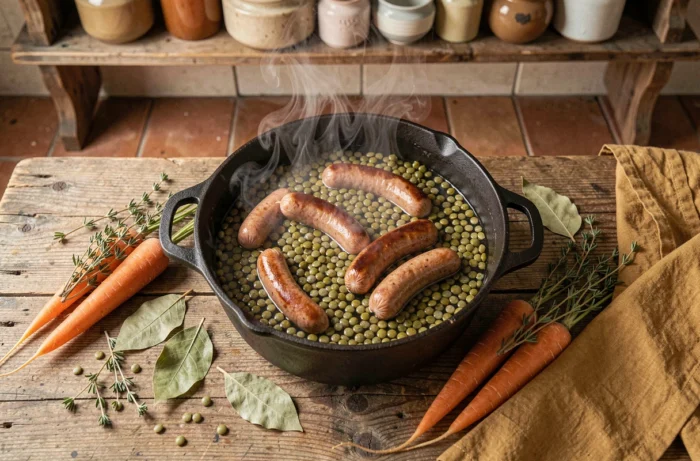
Sausages with lentils are one of those stews that everyone thinks they can master. You put in the lentils, the sausages, some water, and you wait. The result is edible, but rarely memorable. The difference between a decent dish and one that fills the kitchen with aroma lies in three precise actions, often ignored or poorly sequenced.
The fat from the sausage as the aromatic base of the stew
Before touching the lentils, take care of the sausages. Brown them dry in your pot over medium heat for a few minutes on each side. The skin should be golden, slightly crispy in places.
Remove them and set aside. What remains at the bottom of the pot is your flavor base. This cooking fat will be used to sauté diced onions and carrots. The vegetables absorb the caramelized juices and gain a depth that oil alone cannot provide.
This reflex of reusing the cooking fat from the sausages transforms a flat dish into a generous one. It’s the logic of grandmother’s recipes, where nothing is wasted and everything is built in successive layers. If you’re looking for how to make lentils with sausages at Chez Joëlle, you will find this same approach that emphasizes building flavor step by step.
Then add a crushed clove of garlic, a bouquet garni (thyme, bay leaf, parsley), and let everything infuse for a minute before adding liquid. This minute may seem trivial. It allows the aromas to settle in the fat rather than diluting directly in the water.
Cooking green lentils: the trap of salt too early
Have you ever noticed that your lentils sometimes remain firm despite a correct cooking time? The culprit is almost always the salt added too early. When sodium comes into contact with the lentil from the start, the skin toughens and hydration is blocked.
The rule is simple: salt at the end of cooking, never at the beginning. This applies to salt, but also to any salty ingredient like bouillon cubes or heavily seasoned smoked sausages.
Pour the green lentils (no need for pre-soaking, unlike other legumes) into the pot with the sautéed vegetables. Cover with plenty of cold water. The lentils should be submerged with a good margin, as they absorb a lot of liquid.
Simmering rather than boiling
Bring to a boil, then immediately lower the heat. The cooking should be done over low heat, at a steady simmer. A boiling that is too vigorous bursts the lentils and gives a mushy texture instead of tender but whole grains.
Count about thirty minutes of cooking covered, checking regularly. The lentil is cooked when it crushes easily under the pressure of a spoon, without mush around.
Reintroducing the sausages at the right time
The classic mistake is to cook the sausages from start to finish with the lentils. The result: they lose their juices, become dry, and the lentils soak up poorly distributed fat.
The best approach depends on the type of sausage used:
- The Toulouse sausage (fresh, not smoked) should be added back to the pot about ten minutes before the lentils are done, just enough time to finish cooking in the flavored broth.
- The Morteau sausage benefits from being poached separately in cold water brought to a simmer, without piercing it, to preserve its juices, then sliced into thick rounds and added to the lentils at serving time.
- Smoked sausages like Montbéliard can stay longer in the pot (about fifteen minutes) because their thick casing protects them from drying out.
This sequencing may seem cumbersome. In practice, it adds five minutes of management and radically changes the texture in the mouth.
Final seasoning and deglazing: giving depth to the stew
It’s at the very end that the dish takes on its personality. Once the lentils are cooked and the sausages are back in, taste before seasoning. Add salt gradually, and pepper generously.
The acidic touch that changes everything
A splash of red wine vinegar poured into the pot at the end of cooking enhances the entire dish. Not enough to taste the vinegar, just enough to balance the richness of the fat and lentils. A tablespoon is sufficient for four people.
Some recipes use white wine to deglaze the juices after sautéing the vegetables. This technique also works, provided you let the alcohol evaporate completely before adding the water. Otherwise, an unpleasant bitterness lingers.
Serving and pairing lentil sausages
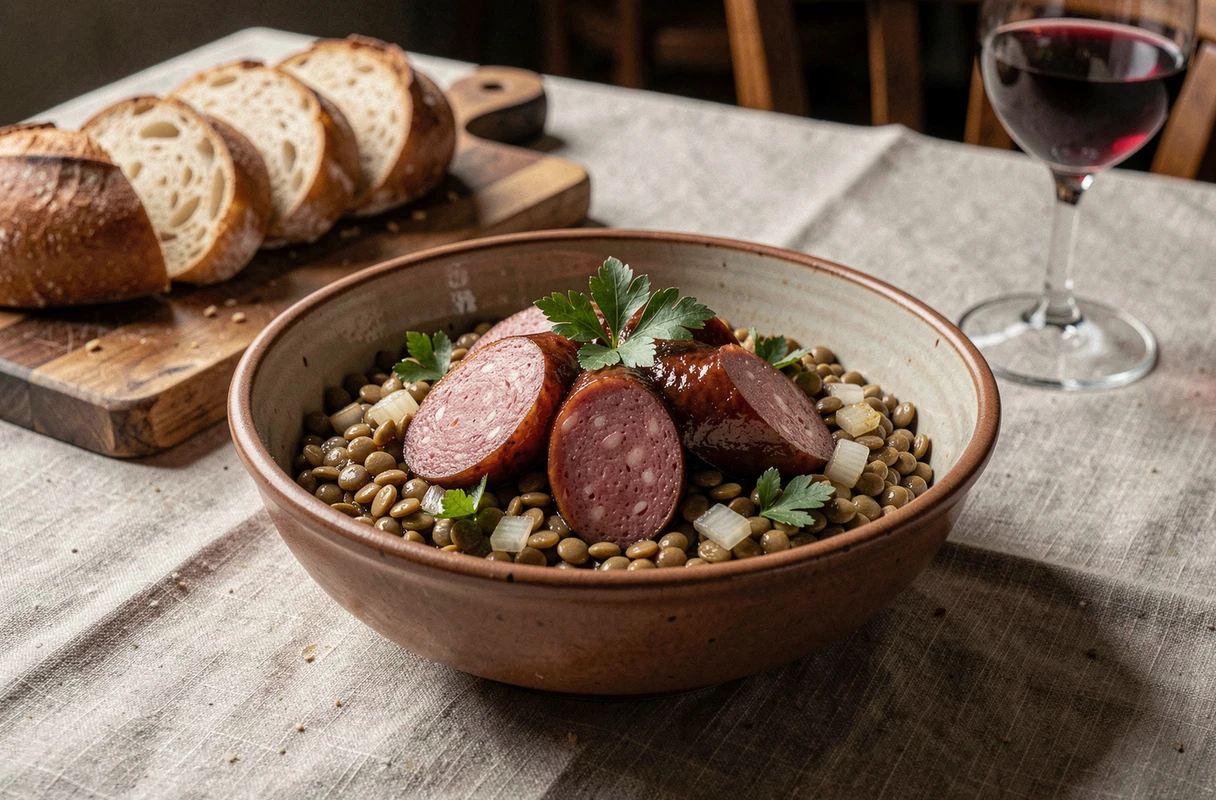
A dish of sausages with lentils doesn’t need a complex garnish. Strong mustard on the side, country bread for dipping, and possibly a green salad as a counterpoint are enough.
The dish improves by resting for a few hours, or even overnight in the refrigerator. Gently reheated the next day, it develops a rounder flavor because the lentils have had time to absorb the aromatic broth. Add a splash of water when reheating to prevent sticking.
The proportions to remember for four people: about 300 g of green lentils, four sausages, one onion, two carrots, one bouquet garni. With these basics and the right cooking techniques, the result far exceeds the simplicity of the ingredients.