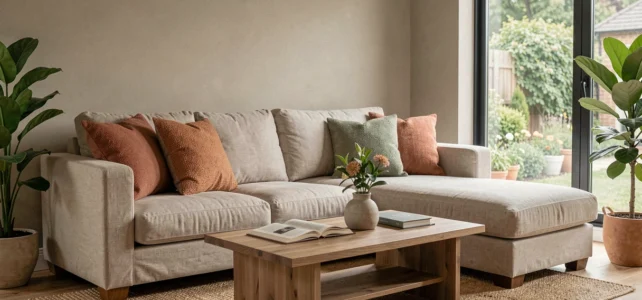
The house of 2026 stands at the intersection of two realities that did not cross five years ago: a regulatory framework that requires renovation before decoration, and aesthetic choices that absorb this energy constraint into their DNA. Since January 1, 2025, homes with a consumption exceeding 450 kWh/m²/year (classified G in the DPE) can no longer be subject to a new lease.
The ban will extend to homes classified F in 2028, and then E in 2034. Decorating without first considering the thermal envelope is akin to disguising a cracked facade.
Energy renovation and interior decoration: the new timeline that conditions everything
The Climate and Resilience Law has established a binding timeline that most decor articles ignore. Landlord owners are the first affected, but owner-occupiers experience an indirect effect: the resale value of a poorly classified property in the DPE drops, prompting heavy renovations (wall insulation, replacement of joinery, ventilation) even before considering a new floor covering or a change in color palette.
In the first half of 2026, the number of large-scale renovation files submitted via MaPrimeRénov’ fell by about 80% compared to the same period in 2025. The renovations actually funded decreased by 22% year-on-year. This slowdown does not reflect a lack of interest from households, but rather an effect of increased administrative complexity.
Specifically, if you are planning living room decoration or interior redesign work, first check the DPE class of your home. An interior insulation project reduces the usable area by a few centimeters per wall, which alters furniture layout, outlet positioning, and sometimes the feasibility of a dressing room or built-in bookshelf. Thinking about decoration and energy performance sequentially rather than in parallel generates extra costs and project rework.
Those looking to follow housing news in a broad sense will find home information on Athomedia useful for articulating these two dimensions.
Raw materials and wood in the home: what the trend hides as constraints

Solid wood, exposed stone, clay, and linen feature in all the 2026 decor trend guides. The movement is not new, but it is hardening: smooth finishes and lacquered surfaces are giving way to visible textures, exposed knots, and ungrouted mortar.
The trap lies in maintenance and compatibility with thermal standards. An uninsulated exposed stone wall remains a thermal bridge. An untreated solid wood table in a humid room (open kitchen, adjoining bathroom) will warp in just a few seasons. The choice of a raw material requires a prior diagnosis of the room’s hygrometry and available ventilation.
For the living room, field reports vary on the durability of polished concrete flooring. Some craftsmen report cracks after two winters in old houses subjected to marked thermal variations. Others apply it without issue on recently laid slabs that are properly insulated. The nature of the support matters as much as the chosen finish.
- Dark wood (walnut, smoked oak) works better in rooms that are well lit by natural light, lest it darken an already constrained space.
- Linen and natural textiles for curtains or cushions require low-temperature washing and do not handle greasy stains well, making them unsuitable for an open-plan living-kitchen without an efficient hood.
- Clay as a wall coating naturally regulates humidity, but its installation requires artisanal expertise that few general contractors master properly.
Trendy living room colors and lighting: two decisions that are one
The 2026 palettes revolve around warm, earthy tones: terracotta, brown, ochre, sometimes accented with touches of deep blue or green. Neutral tones (beige, greige, off-white) remain the base upon which these accents are placed.
A warm ochre under LED lighting at 6,000 K (cold light, common in cheap ceiling lights) turns into a dirty yellow. The same ochre under a 2,700 K bulb regains its depth. Testing a shade under the actual lighting of the room remains the only reliable way to avoid unpleasant surprises.
Interior lighting design has become a separate line item in expenses. Fixtures no longer serve only to illuminate: they sculpt the space, create zones, and alter the perception of colors and materials. Before choosing a paint, test it under the actual lighting of the room at different times of the day.
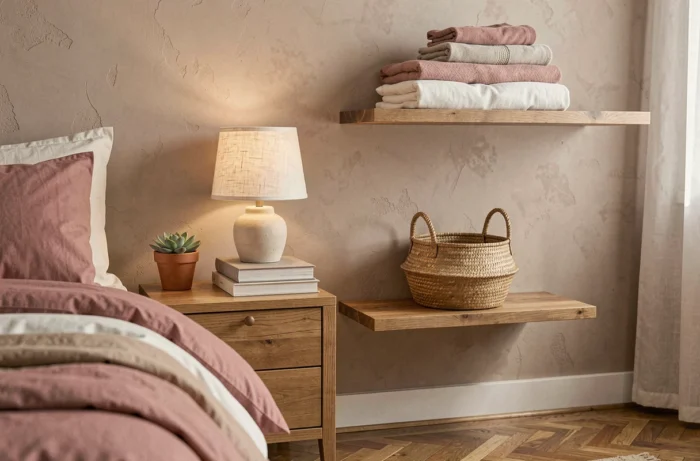
The revisited Scandinavian style, omnipresent for several years, now incorporates darker woods and heavier textiles (thick wool, corduroy). This evolution brings the Nordic style closer to the “cocooning” vocabulary without falling into excess. A few cushions in raw wool and a brushed brass light fixture are enough to update a living room without engaging in heavy renovations.
Home decor ideas: balancing trend and durability
The most useful question to ask before any decor purchase in 2026 is not “Is it trendy?” but “Will I still like it in three years?” Trend cycles are shortening due to social media, and a geometric patterned wallpaper can date an interior as quickly as it modernized it.
- Structural elements (wall paint, flooring, main lighting) benefit from remaining in durable tones and styles: neutrals, natural materials, simple shapes.
- Removable elements (cushions, throws, tabletop objects, frames) absorb seasonal trends without commitment.
- Mid-range furniture often ages worse than clearly defined entry-level or high-end furniture. A piece of raw solid wood furniture will outlast trends; a piece of chipboard furniture styled as “trendy” will go out of fashion and degrade at the same time.
The balance between mandatory energy performance and interior decoration desires defines the real housing issue of this year. Owners who first renovate the thermal envelope and then decorate in the process avoid rework and align their interiors with a regulatory framework that will only tighten until 2034.