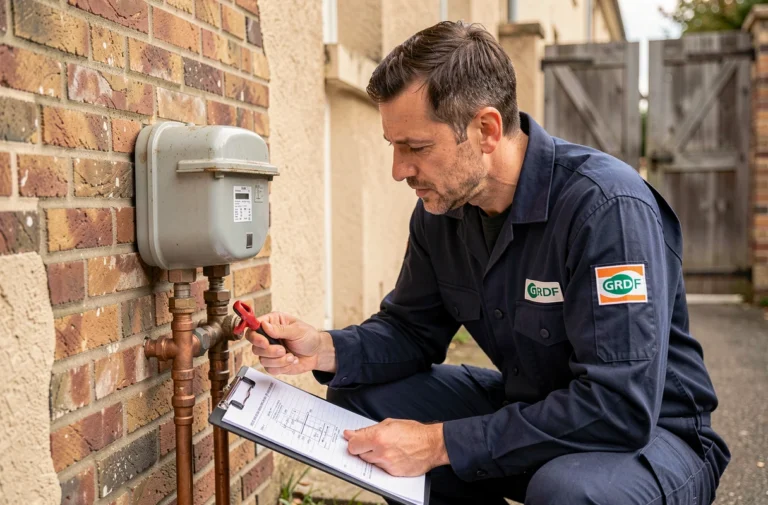
A fire starts in the kitchen, smoke accumulates in just a few seconds and invades the hallway. The first reaction is often to open a window to breathe or to leave the doors wide open while fleeing. Both of these reflexes worsen the situation. The additional oxygen feeds the flames, and toxic smoke circulates freely throughout the home.
Toxic smoke in house fires: the real danger is not the fire
We imagine a fire as a wall of flames. In practice, it is the smoke that kills. Modern homes contain plastics, synthetic foams, and coatings that, when burned, release carbon monoxide and irritating gases within minutes.
The time available to evacuate reduces to about three minutes once smoke fills an open space. This very short time explains why every obstacle placed between the fire and the occupants matters.
In a home where all interior doors are open, smoke saturates the total volume in a much shorter time than in a compartmentalized home. This is why closing doors and windows is the most underestimated preventive action during a house fire.
Closed door and temperature: what thermal tests show
Tests conducted with thermal cameras show that a closed door can significantly lower the temperature in the room adjacent to the fire by up to ten times compared to a room with an open door. The difference is massive.
In practical terms, a room with the door open during a fire can reach temperatures incompatible with survival in just a few minutes. The same room with the door closed remains at a bearable temperature for much longer, giving rescuers time to intervene.
Standard interior door or fire door: what protection?
It is often thought that a special door is needed for the effect to work. An ordinary interior door, even a lightweight one, already holds back smoke for a certain period. It is not airtight, but it slows the spread and can extend the viability of an evacuation route by several additional minutes.
For collective housing, new requirements mandate certified EI30 doors during replacements, capable of resisting fire and smoke for thirty minutes. A closed EI30 door offers effective compartmentalization for at least half an hour, which an old hollow-core door does not guarantee at all.
Open windows during a fire: the mistake that accelerates the fire
The reflex to open a window when smelling smoke seems logical. We seek fresh air. The problem is that the influx of oxygen reignites combustion. A fire that was starting to smother in a closed room will flare up violently as soon as a draft feeds it.
Firefighters are well aware of this phenomenon. A fire that is under-ventilated in a closed room can cause a rapid flashover when a door or window is opened. Keeping windows closed deprives the fire of its main fuel: oxygen.
Evacuation and windows: when opening makes sense
There is only one case where opening a window is justified: when trapped in a room far from the fire, with the door closed, and needing to signal your presence to rescuers or to breathe while waiting for help. In this specific situation, you open the window of the room you are in, not the one on fire.
The rule remains simple: close everything between you and the fire, and do not create a cross-draft that would draw smoke into still safe areas.
Fire prevention actions: the closed door reflex in daily life
The habit of sleeping with doors closed is not widespread. Many families leave bedroom doors open at night, especially to hear the children. This habit creates a highway for smoke in the event of a nighttime fire, the deadliest scenario.
Adopting the closed door reflex at night costs nothing and requires no equipment. For worried parents, a baby monitor replaces the need to listen closely while maintaining the safety of the occupants.
Beyond the door, a few additional measures enhance protection:
- Install smoke detectors in every living area and in the hallway, checking the batteries at least twice a year
- Establish an evacuation plan known to all occupants, with an identified outdoor meeting point
- Have an appropriate fire extinguisher (water or powder depending on the risks) accessible without having to cross the kitchen or garage
- Always close interior doors before leaving the home or going to sleep
A smoke detector alerts, but only a closed door slows the spread. These two devices work together: one gives the signal, the other buys time.
Confinement or evacuation in case of fire: how to decide
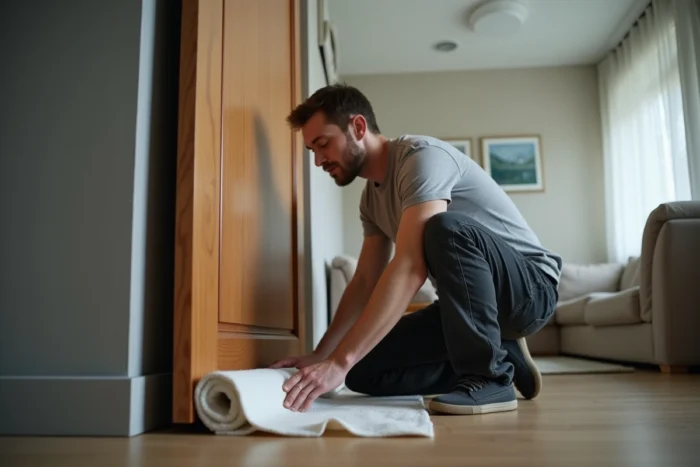
When a fire breaks out in a collective building and smoke fills the common areas, the emergency services’ instruction is clear: stay at home, keep the front door closed, and seal the bottom of the door with a damp cloth. Staying behind a closed door is better than fleeing through a smoky hallway.
In a single-family home, if the path to the exit is clear and smoke-free, evacuate immediately while closing each door behind you. Each closed door slows the fire’s progression and protects the structure longer, which also aids firefighters’ intervention.
Feedback on this point varies depending on the layout of the home, but the principle remains the same: never cross opaque smoke, never reopen a hot door, and call for help as soon as possible, indicating your exact location in the building.
The most effective action in the face of a house fire can be summed up in two words: close the door. No need for expensive equipment or technical training. A closed door, functional detectors, and an evacuation plan known to the whole family cover the essentials of fire prevention at home.