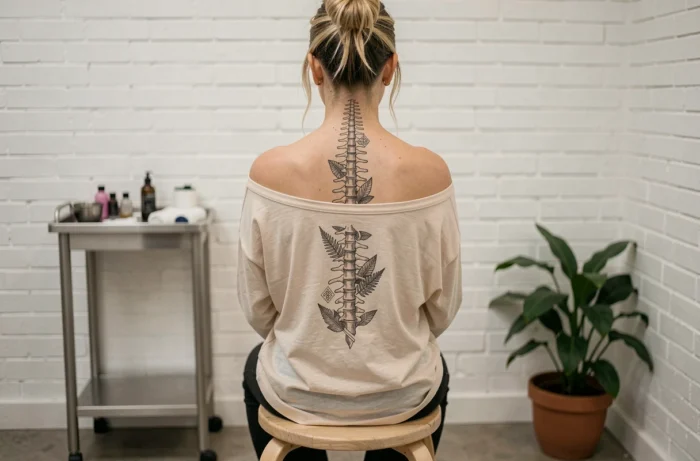
The spine concentrates a nerve and bone density that makes tattooing in this area particularly unique. Between the proximity of the spinous processes, the vibrations transmitted by the needle, and a healing process complicated by daily friction, this placement requires specific preparation and rigorous follow-up.
Spinal Tattoo and ARS Certification: A Safety Criterion to Check
Since the decree of March 5, 2024, training in hygiene and health rules for tattoo artists leads to a certification issued by the Regional Health Agency (ARS) valid for five years. Older certificates remain valid during a transitional period, but this change means that all studios will need to renew their certification within a few years.
For a tattoo along the spine, this requirement is not trivial. The area is in direct proximity to the spinal canal and major nerve pathways. A poorly sterilized needle or an approximate hygiene protocol exposes one to infectious risks whose consequences can go beyond dermatological issues. Before any session, asking to see the tattoo artist’s recent ARS certification is a basic reflex, not an unnecessary precaution.
In addition to the certification, observing the studio environment provides reliable clues: single-use materials unpacked in front of the client, disinfected work surfaces between each session, inks compliant with European REACH regulations. This strengthened regulatory framework encourages serious professionals to document their practices, making it easier for individuals wanting to get tattooed in such an exposed area to make a choice.
Pain of a Spinal Tattoo: How Proximity to Bone Changes Things
The pain of a tattoo on the spine depends on factors that traditional pain scales do not capture well. The skin covering the vertebrae is thin, and the subcutaneous tissue separating the dermis from the bone is minimal. The needle therefore works at a very short distance from the periosteum, the membrane that envelops the vertebrae and is richly innervated.
The most characteristic sensation is not a sharp sting, but a deep vibration that radiates along the spine. Several tattoo artists describe this phenomenon: the mechanical wave of the needle propagates through bone conduction, which can trigger an unpleasant sensation even in the ribs or pelvis. It is not a “cutting” pain, but rather a dull resonance that accumulates over the course of the session.
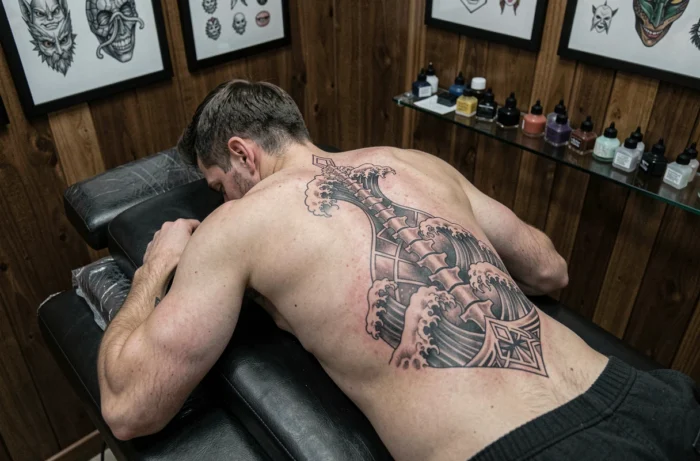
Field reports vary on this point: some people find the spine more bearable than the floating ribs, while others rank it among the most challenging areas. Individual morphology (thickness of adipose tissue at the lumbar versus cervical level), personal pain tolerance, and the duration of the session play as much of a role as the location itself.
Factors That Alter Perception During the Session
- Fatigue and lack of sleep lower the pain threshold. A full night’s rest before the session limits nerve sensitivity.
- Diet plays a direct role: a balanced meal a few hours prior avoids blood sugar drops that amplify discomfort.
- The prone position, sometimes maintained for over an hour, can create muscle tension in the cervical and lumbar regions that adds to the pain of the tattoo itself.
Healing a Tattoo on the Spine: Specific Constraints for the Back
The healing of a tattoo generally follows the same phases regardless of location: initial inflammation, formation of fine scabs, and then regeneration of the epidermis over several weeks. On the spine, the constant friction from clothing complicates each stage.
In the first few days, the tattooed skin oozes and remains sticky. A cotton t-shirt adheres to the surface, and removing it can tear off still fragile micro-scabs, slowing tissue repair and risking the loss of some pigment. Wearing loose-fitting clothing made of natural fibers during the first two weeks reduces this issue.
Dry or Wet Healing: Which Approach for the Back
Two schools of thought coexist among tattoo artists. Wet healing relies on the regular application of a healing cream or a transparent protective film that keeps the area hydrated. Dry healing leaves the skin exposed to air after cleaning. For the back, the wet method with a film has a practical advantage: the film creates a physical barrier against textile friction and limits itching.
Itching usually appears after a few days and signals cellular regeneration. Scratching the tattooed area remains the most damaging action for the final result. On the back, the temptation is even stronger as the area is hard to reach: one instinctively rubs against a chair back. Applying a fragrance-free soothing cream alleviates this sensation.
Post-Tattoo Risks on the Spine: When to Consult a Doctor
Moderate redness and slight swelling in the days following the session are normal. However, certain signals should prompt a quick medical consultation:
- Excessive heat and swelling that increase after the third day, accompanied by throbbing pain, may indicate a bacterial infection.
- Greenish oozing or an unusual odor at the tattooed area warrants immediate medical advice.
- Intense itching localized to certain colors of the tattoo may signal an allergic reaction to the pigments, even several weeks after the session.
- A fever that appears in the days following the tattoo should never be attributed to stress or fatigue without examination.
The proximity of the spine to the central nervous system makes any deep infection potentially more concerning than elsewhere on the body. The available data do not allow for precise quantification of this increased risk, but caution is warranted: at the slightest doubt, a dermatologist or general practitioner can prescribe appropriate treatment before the situation complicates.
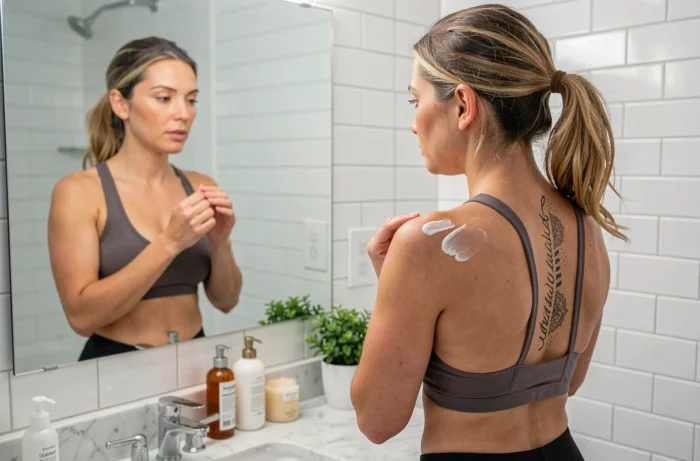
A tattoo on the spine combines atypical pain related to bone conduction, healing made delicate by the friction of the back against textiles, and a French regulatory framework that now offers an objective criterion for selecting the studio. Checking the ARS certification, planning suitable clothing during healing, and monitoring signs of infection remain the minimal foundation for ensuring that the final result meets expectations.