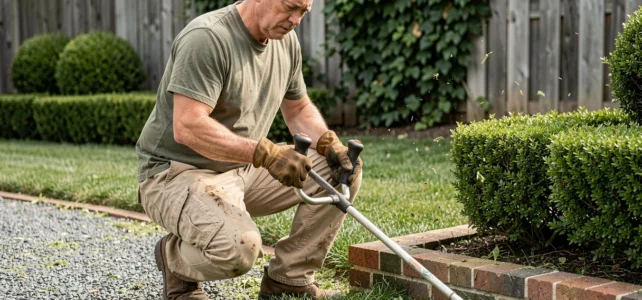
The thermal string trimmer remains a unique tool in the gardener’s arsenal. Heavier, noisier, and more demanding in maintenance than its electric or battery counterparts, it retains a place that the latter cannot occupy on certain terrains. Choosing a thermal model knowingly means going beyond a simple comparison of technical specifications and considering constraints that traditional buying guides rarely mention.
Noise constraints and regulations: a technical criterion
One of the least documented aspects in consumer comparisons concerns noise. A thermal string trimmer generates a sound level significantly higher than that of an electric or battery model. For individuals, this mainly relates to personal comfort and good neighborliness.
For professionals (landscapers, municipal agents), the situation has changed. The standard NF EN ISO 9612 updated in June 2025, incorporated into French regulations in 2026, imposes a stricter assessment of noise exposure in the workplace. Thermal string trimmers are directly affected.
This evolution has a concrete consequence: choosing a quieter thermal model is no longer just a comfort argument but a regulatory compliance criterion to avoid exceeding exposure thresholds. Manufacturers that display sound pressure levels measured according to this standard provide a reliable benchmark. Others leave the buyer in the dark.
Individuals are also indirectly affected. Noise emergence rules in residential areas apply to garden equipment used near homes. A thermal string trimmer used early in the morning or late in the day can pose a real legal problem, beyond mere inconvenience. Municipal decrees regulating the use of thermal engine devices are multiplying, and it is useful to consult the resources available on coupebordurethermique.fr to identify the models best suited for residential use.
Two-stroke or four-stroke engine: beyond raw power
The majority of consumer thermal string trimmers are equipped with a two-stroke engine. This type of engine offers a good power-to-weight ratio, relatively simple starting, and a contained purchase cost. The oil-gasoline mixture it requires remains its main constraint.
Four-stroke engines, less common in this segment, have different characteristics:
- Reduced fuel consumption compared to a two-stroke of equivalent power, with operation on gasoline only (no mixture to prepare)
- Generally lower noise level, which directly relates to the regulatory issue mentioned above
- Higher weight and higher purchase price, making them more suitable for intensive or semi-professional use
- More complex maintenance (oil change, monitoring engine oil level) but often longer intervals between maintenance
The choice between the two is not just a question of power. A four-stroke engine is better suited for long sessions on large areas, where fatigue from noise and vibrations becomes a limiting factor. For occasional finishing around flower beds and paths, a lightweight two-stroke does the job without extra cost.
Cutting head and wire diameter: what really determines finishing quality
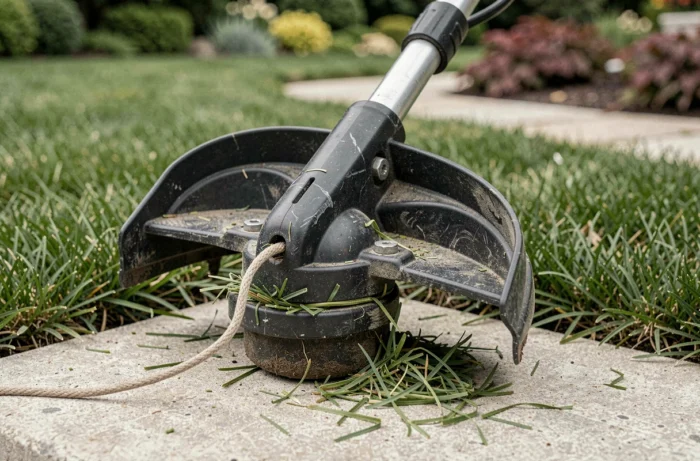
The power of the engine grabs all the attention, but it is the cutting head that determines the visible result. Two parameters matter: the wire feeding system and the diameter of this wire.
Semi-automatic feeding heads (tapping the head on the ground to release wire) are the most common. Quick-loading heads, where a segment of wire is replaced without disassembling the spool, save considerable time in the field. The wire loading system directly influences the time spent on maintenance rather than effective cutting.
The diameter of the wire must correspond to the targeted vegetation. A thin wire is suitable for soft grass along the lawn’s edge. When faced with dense grasses, woody regrowth, or overgrown vegetation, a larger diameter wire (or even a serrated profile) becomes necessary to avoid constant breakage.
Some thermal models also accept plastic knife heads or metal discs, bringing them closer to brush cutters. This versatility only makes sense if the tube and harness are sized accordingly. Mounting a disc on a lightweight string trimmer designed for wire creates a dangerous imbalance.
Cutting width and ergonomics: adapting the tool to the terrain, not the other way around
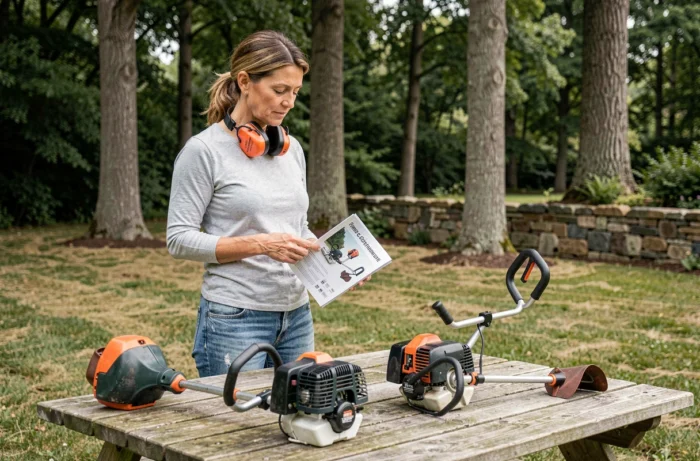
The cutting width varies significantly from one model to another. A generous width allows for covering more area in fewer passes but reduces precision in narrow zones (between closely spaced borders, around fence posts).
Ergonomics weigh as much as the technical specifications. An adjustable telescopic tube, an orientable handle, and a properly padded carrying harness radically change comfort during a session lasting more than twenty minutes. Field feedback varies on this point: a model deemed comfortable by a tall user may become cumbersome for someone shorter if the tube’s adjustment lacks range.
The total weight in working order (full tank, equipped head) is a more relevant indicator than the empty weight stated by the manufacturer. The difference between the two can reach several hundred grams, enough to change the feel in hand.
Maintenance of a thermal string trimmer: often underestimated aspects
A thermal string trimmer requires regular maintenance that many individuals discover after purchase. The air filter must be cleaned or replaced frequently, especially in dusty conditions. The spark plug fouls more quickly with a poorly mixed fuel. The carburetor may require seasonal adjustment.
- Winterizing: empty the tank or add a fuel stabilizer before a long period of non-use, to avoid clogged circuits in spring
- Cutting wire: store replacement spools away from heat and direct sunlight, which make the wire brittle
- Starter: check the starting cord and the return spring, the first elements to wear out on a two-stroke engine
Neglected maintenance degrades performance long before the engine fails. Loss of power, difficult starts, and excessive wire consumption are often symptoms of a clogged filter or an improperly adjusted carburetor, not a manufacturing defect.
The thermal string trimmer remains relevant for large gardens, sloped terrains, or areas overrun with tough vegetation. For modest plots in densely populated residential areas, the regulatory pressure on noise and the ease of maintenance of battery models deserve to be weighed before any purchase.