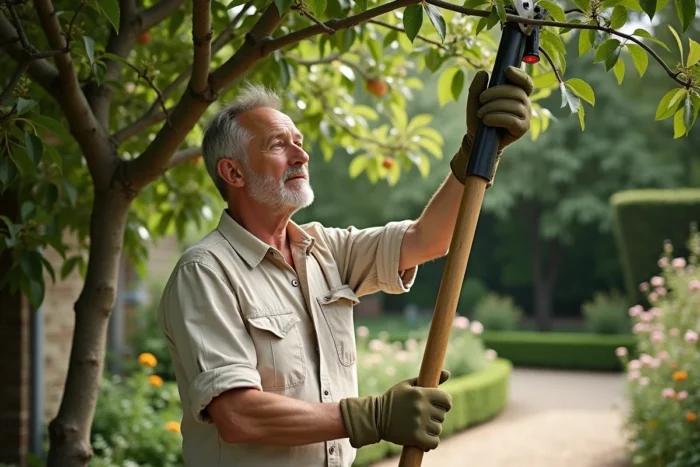
A pole saw is a lightweight chainsaw designed to cut branches at height or in hard-to-reach areas. Its guide bar typically measures less than 30 cm, and its weight remains under a few kilograms to allow for prolonged use without excessive fatigue. Choosing the best pole saw to maintain your garden involves understanding three technical parameters that are often poorly prioritized: the type of motorization, the length of the guide bar, and the overall ergonomics of the device.
Guide Bar Length and Actual Cutting Diameter
The guide bar determines the maximum diameter of branches that the pole saw can cut in a single pass. Most consumer models offer a guide of 20 to 25 cm, which corresponds to branches of a slightly smaller diameter. Attempting to cut a branch thicker than the guide exposes you to a chain jam, or even a dangerous kickback.
Before purchasing, measure the thickest branches you will need to cut regularly. For an orchard or ornamental trees, a 25 cm guide covers most situations. Beyond that, a traditional chainsaw will be more suitable than a pole saw. The comparison available at elagueuse-warrior.com helps identify models based on this cutting diameter criterion.
The guide bar should never be chosen too large relative to actual use. A shorter guide offers better control and reduces the weight of the tool, which is important when working with arms raised for long minutes.
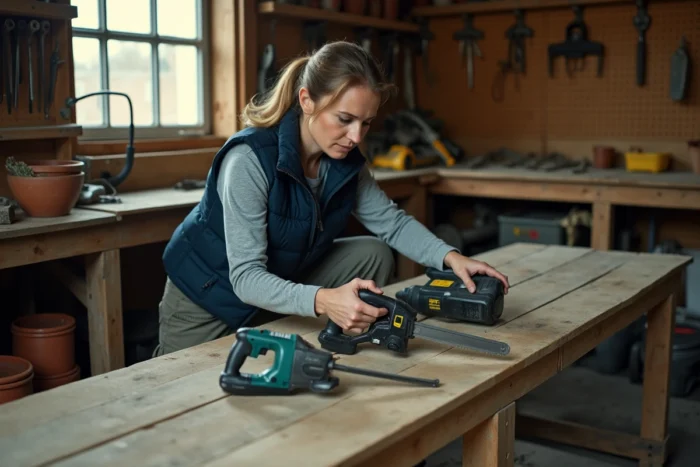
Battery, Gas, or Corded Pole Saw: Which Motorization to Choose
The motorization affects the autonomy, weight, noise, and maintenance of the pole saw. Each type caters to a different usage profile.
Battery Pole Saw
This is the segment that is growing the most. Lithium-ion battery models offer instant start, reduced noise levels, and no gas emissions. Their limitation remains autonomy, which depends on the battery capacity and the thickness of the branches being cut.
For a modest-sized garden with occasional maintenance work, a battery pole saw covers most needs. Consider a second battery if your sessions regularly exceed half an hour of continuous cutting.
Gas Pole Saw
More powerful, it can handle denser branches and operates without time limits. The trade-off: a higher weight, more pronounced vibrations, regular engine maintenance (spark plug, air filter, oil-gas mixture), and significantly higher noise. This type is suitable for large areas or hardwood trees.
Corded Pole Saw
Connected to the mains via a cable, it provides constant power without autonomy issues. However, the cable constraint limits mobility and makes it unsuitable for trees far from any electrical outlet. It remains a relevant choice for hedges or trees close to the house.
- Battery: lightweight, silent, limited autonomy, ideal for small gardens and routine maintenance
- Gas: maximum power, unlimited autonomy, high weight and noise, suitable for large areas
- Corded: consistent power, often lower purchase price, reduced mobility due to the cable
Classic Pole Saw or Telescopic Pole Saw: The Height of Cut Criterion
A classic pole saw is held with one or two hands, at chest height or above the head. It is suitable for branches accessible from the ground or a step ladder. The telescopic pole saw adds a telescopic handle that allows you to reach branches located several meters high without a ladder.
The pole extends the reach, but it radically changes the ergonomics. The weight shifts to the arms and shoulders, cutting precision decreases with distance, and fatigue sets in more quickly. Specialized guides recommend wearing a double harness with a lumbar belt as soon as the pole exceeds a certain length, to limit musculoskeletal disorders during repeated work.
For the same reason, organizing work with regular breaks (at least five minutes every thirty minutes of continuous cutting) protects the shoulders, neck, and lower back. It is also an opportunity to check the condition of the chain and chain brake.
Weight, Chain Tension, and Safety: Three Points to Check Before Purchase
The weight of the pole saw directly affects the duration of comfortable use. A few hundred grams of difference between two models can be felt after ten minutes of working at height. Always compare the weight with the battery or full tank, not the empty weight indicated on some technical sheets.
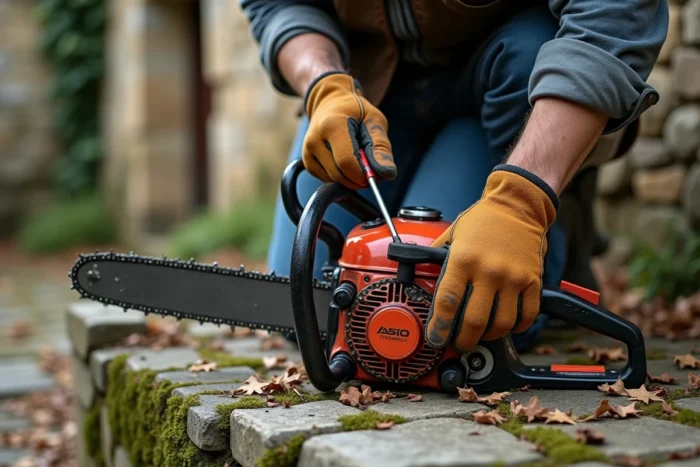
The tool-free chain tensioning system simplifies adjustment on the field. A poorly tensioned chain can easily derail and wear out prematurely. Models equipped with a tensioning knob allow for adjustments in seconds, without a wrench or screwdriver.
Safety relies on three non-negotiable elements:
- A quick-release chain brake that stops the chain in case of kickback
- A sufficiently wide front hand guard to cover the entire width of the handle
- An effective anti-vibration system, especially on gas models where prolonged vibrations cause numbness
Always wear cut-resistant gloves, safety glasses, and a helmet with a visor if you are working at height. These pieces of equipment are not optional, even for routine maintenance work in the garden.
Chain and Guide Maintenance After Each Pruning
A sharpened chain cuts cleanly, without straining the motor. Sharpening the chain after each extended session prolongs the life of the guide and reduces energy consumption (battery or fuel). A round file suitable for the chain pitch is sufficient for manual sharpening.
Clean the groove of the guide bar to remove compacted sawdust. Check the wear of the drive sprocket, which should be replaced when it shows visible signs of wear. Lubricate the chain with specific oil before each use to limit friction and overheating.
Regular maintenance of these elements maintains cutting performance and prolongs the lifespan of the tool. Neglecting sharpening forces you to push harder, which accelerates overall wear and increases the risk of kickback.
Ultimately, the choice of a pole saw depends on three concrete considerations: the maximum diameter of branches to be cut, the usual working height, and the duration of sessions. Clarifying these three points before consulting product sheets eliminates the majority of unsuitable models and directs you toward a tool you will actually use, season after season.