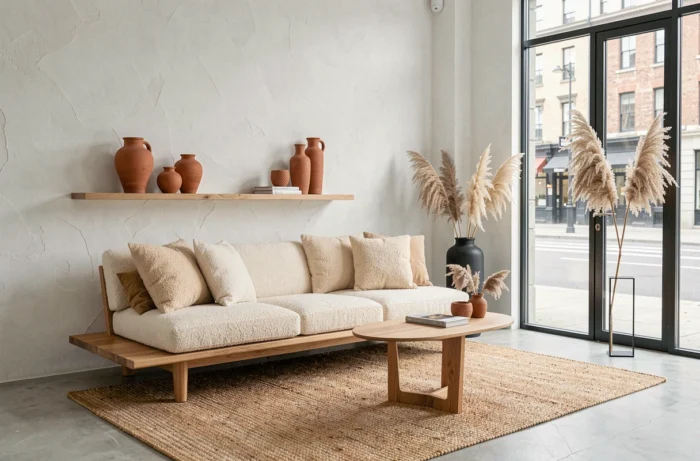
Redecorating an interior means changing the perception of a space without necessarily undertaking major renovations. The operation relies on three levers: color, materials, and furniture arrangement. Each of these levers affects the ambiance of a room in a measurable way, provided you understand how they interact.
Painted ceilings and forgotten surfaces: the decor makeover starts high
Most interior decoration advice focuses on walls, furniture, or textiles. The ceiling remains systematically white, by default. It’s an entire surface that does not contribute to the room’s ambiance.
Painting or wallpapering a ceiling radically changes the perception of a volume. A dark shade visually lowers the height and creates an enveloping feeling, suitable for a bedroom or office. A light but saturated color (water green, pale blue) adds depth without overwhelming the space.
This approach requires just a can of paint and a telescopic roller. The result transforms a mundane room into a space with strong personality. To find decorative pieces that complement this type of choice, specialized catalogs like https://www.ego-deco.fr/ gather furniture and accessories designed for bold interiors.
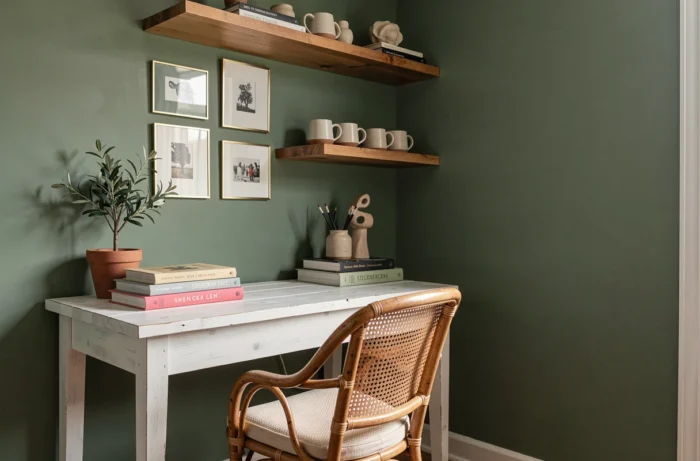
Maximalist trend: daring colors and textures in interior decoration
Neutral minimalism (white walls, light wood, clean lines) has dominated decoration for several years. The current trend goes in the opposite direction. Maximalism embraces rich colors, layered patterns, and visually striking objects.
In practical terms, this means mixing cushions with different prints, pairing corduroy with raw linen on the same sofa, or hanging a wall of frames in various sizes. Accumulation works when it respects a coherent palette: three or four dominant colors are enough to avoid cacophony.
Combining colors and materials without bad taste
The trap of maximalism is chaos. To maintain a readable ensemble, apply a simple proportion rule:
- A dominant color occupies about two-thirds of the visible surfaces (walls, floor, large furniture).
- A secondary color appears on textiles, seating, or an accent wall.
- One or two punctuating shades are found on decorative objects, lighting, or frames.
Texture is just as important as color in a successful makeover. A monochromatic interior gains depth as soon as you introduce rattan, glazed ceramics, or brushed metal. These tactile contrasts create visual richness without adding extra color.
Multifunctional furniture and adaptable layouts for small spaces
The trend towards multifunctional furniture responds to a real constraint: living spaces are shrinking in many urban areas. A piece of furniture that serves two roles frees up floor space and simplifies the layout.
A coffee table with integrated storage, a quick-mechanism convertible sofa, or an extendable console that transforms into a dining table are concrete examples. The goal is not to fill less, but to fill better.
Reorganizing without buying: the layout changes everything
Before investing in new furniture, move what you already own. A sofa facing the window rather than the wall creates a different perspective. A bookshelf used as a partial partition redefines the zones of a living-dining room.
Circulation in the room deserves as much attention as the decoration itself. An unobstructed passage between two living areas gives a sense of space, even in a modest home.
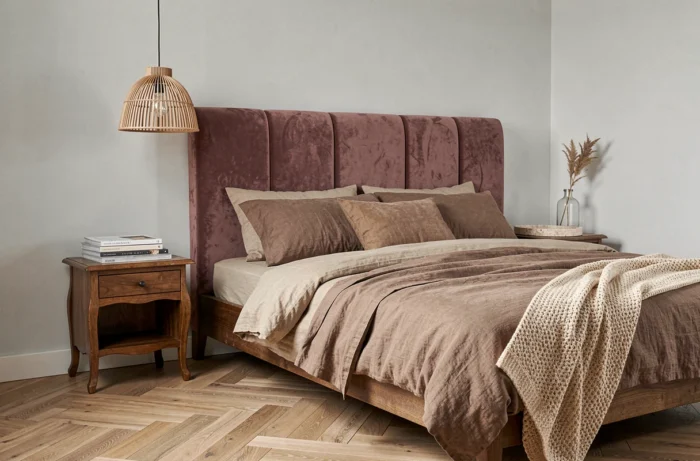
Healthy materials and eco-labels: what the regulation on formaldehyde changes
One aspect rarely addressed in makeover guides concerns the health quality of furniture and decorative materials. The European regulation on formaldehyde in wooden furniture is tightening, with new limits coming into effect from August 2026 through the REACH regulation (entry 77).
Formaldehyde is a volatile organic compound found in many particle boards, plywood, and MDF used to make inexpensive furniture. At high concentrations, it degrades indoor air quality.
How to choose compliant decorative furniture
For a makeover that does not compromise air quality, a few guidelines help to sort through options:
- Check for the European Eco-label on furniture, which imposes strict criteria on volatile compound emissions.
- Prefer solid wood, rattan, or metal for main pieces, as these materials emit little or no formaldehyde.
- Paints bearing the EU Eco-label meet controlled emission thresholds, a criterion to verify for any repainting of walls or furniture.
A trendy makeover can also be a healthy one. The two objectives are not mutually exclusive: raw wood, natural fibers, and matte finishes, which are very present in current trends, are also among the least emissive materials.
Plant inspiration and biophilic design for a vibrant interior
Biophilic design involves integrating natural elements into the inhabited space: plants, raw materials, natural light, organic shapes. This approach goes beyond the mere presence of a ficus in a corner of the living room.
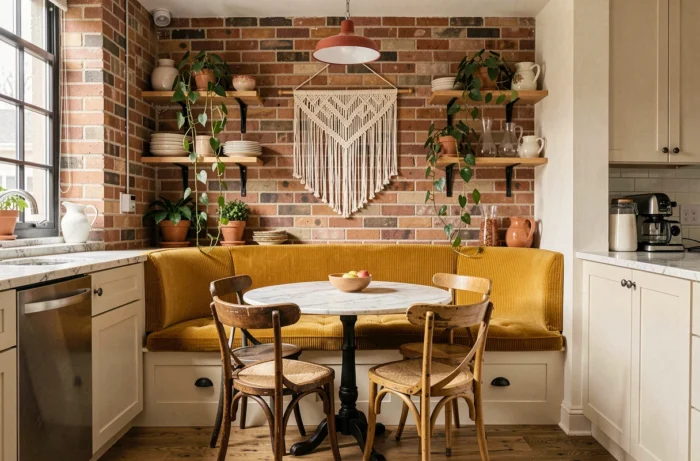
A wall of climbing plants on an indoor trellis, terracotta pots of different sizes arranged in a group, or a light fixture made of woven fibers are enough to anchor a room in this aesthetic. Vietnamese natural materials (rattan, bamboo, water hyacinth) are gaining visibility in recent decoration collections, driven by the rise of eco-luxury.
The interest in plants is not limited to appearance. Plants help regulate ambient humidity and add life to spaces that otherwise remain static between two tidying sessions.
Redecorating an interior is best approached as a coherent project rather than a series of isolated purchases. Choosing a focus (color, material, use of space) and sticking to it produces a more readable result than an accumulation of scattered good ideas. The new regulation on formaldehyde adds an additional selection criterion, which naturally guides towards materials compatible with current trends.